Low Fidelity
A micro music memoir written for the new issue of LCD magazine which did not make the cut

I am more than half a century old and not to brag but I’ve probably forgotten more jobs, concerts, mishaps, woes, and incidents than ever happen in some folks’ lifetimes. Despite a wealth of fun writing fodder, I long ago stopped submitting short-form memoir writing for publication. (I don’t like rejection.) Instead I squirrel away tales from my life in various documents for a hoped-for future book-length incarnation (and so I don’t forget them). However, when my favorite radio station WFMU recently asked for submissions with the theme “forgotten formats” for the revival of their print magazine LCD, I had the perfect story! I wrote it down. Alas, the LCDecider didn’t agree. Anyway, here it is. If you want to show me that you’re here, too, please give a heart / comment / share.
When I was a student at Seton Hall University, from around 1993 - 1994, I commuted to school in an old Mustang, which was a hand-me-down from my brother Sean. (The only way to get cars as a teen in my family was for somebody to give one to you.) “Old Mustang” sounds cool until you know that this one was from 1981 when it seems that Ford had an identity crisis and decided to make Mustangs look less sports car and more of a compact grandparent sedan. It was a metallic barf color.
Like all hand-me-down cars in my family, this one had Problems. The most memorable concern was that sometimes when I made a hard turn, a liquid would stream out from under the dashboard onto my right foot and the pedals. It was antifreeze.
By way of a sound system, this Mustang had a radio and an 8-track tape deck1. I was familiar with the defunct format from an imposing piece of furniture/stereo we had at home that we called the coffin, because it was roughly that size and configuration, only more flat and rectangular. You’d lift up half of the coffin lid and hidden below was a turntable and a green backlit radio display and an 8 track deck, with a limited selection of 8 track blandness like Seals and Crofts and Anne Murray. I did not take any 8-track tapes from home.
So as I made my customary rounds of thrift stores and rummage sales over time, I filled a paper grocery bag with 8 tracks that stayed in the car. They included a copy of Alice Cooper’s Welcome to My Nightmare in pink plastic that I regret not having anymore, and two Herbie Hancocks that I still have.
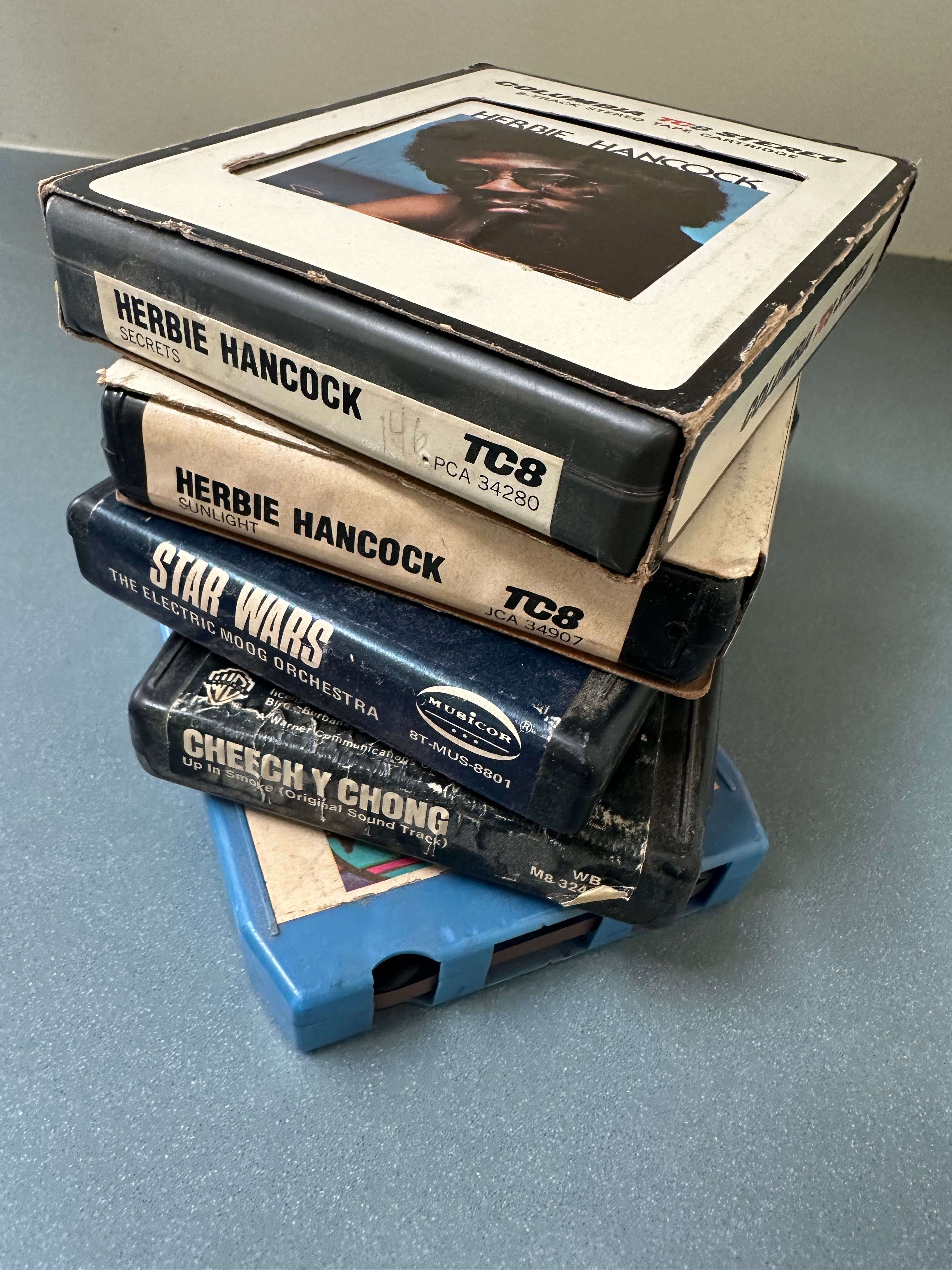
Once 8 tracks were in my everyday life, I became familiar with their drawbacks. The most egregious one would happen mid-song when the sound would fade out, then there was an intrusive, mechanical ca-chonk sound as the play head on the tape switched to another program, and the same song would then fade back in, and this was just how it was. No warnings or apologies on the label (although some tapes had workarounds to avoid interruptions, like rearranged song lineup). When this several-second indignity occurred, it was up to you, the listener, to provide the continuity edit in your mind, or just endure it.
The outdated tech was fun to show my passengers, but even at that point three decades ago, my 8-track tapes’ sound quality had deteriorated in parts, which was probably not helped by the temperature extremes of being stored in a car. At any point an 8-track tape’s audio might fuzz off into the distant, vague strains of a forgotten song from a faded dream, or its warped wobbles might feel like you, the listener, were experiencing a neurological event and should possibly pull over. For those drives when my favored radio stations, WSOU (Seton Hall’s Pirate radio, where I was a DJ) and WFMU (I was just beginning to tune in) weren’t cutting it, I needed more music options.
Fortunately, my brother provided me with a salvation I didn’t know existed, an adapter which instantly became essential to my commutes. The plastic device looked like a small tabletop top-load tape recorder, with one 8-track-shaped end which stuck into the 8-track deck. This wizardry, protruding conspicuously from the dash, allowed me to play standard-issue compact cassettes through the car stereo to my heart’s content. So now I had two kinds of tapes in the car.
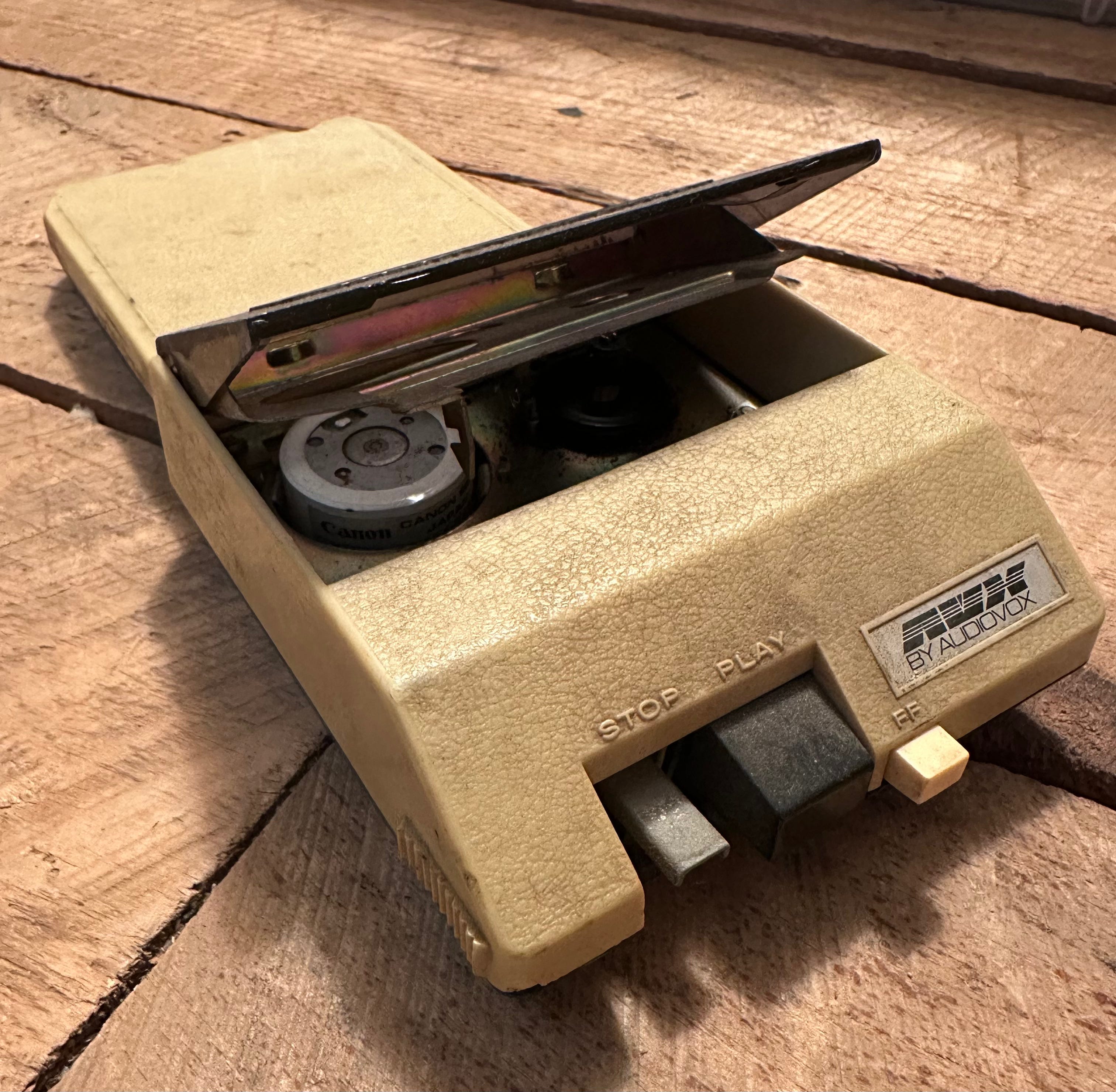
In that mid-1990s college milieu, a lot of media types coexisted. At WSOU we used carts, which were cartridges that had the same look and same technology as 8-tracks but which played shorter bits like radio show promos. We also learned to physically edit (with a razor blade) audio tape similar to what 8-track tapes used, but for play on reel-to-reel tape machines. In communications class, we learned about the upcoming online “information superhighway.”
But as far as my preferred format went for new releases, we were in CD times. My brother came through yet again, loaning me his compact cassette-shaped adapter that had a thin wire I could plug into the jack of a portable CD player. So then when I had the full rig set up, I’d play a CD through the cassette tape adapter through the 8-track tape adapter.
And... it didn’t sound great. But it was better than an 8-track.
When 8-tracks were invented in the mid-60s, Ford put decks in every car model, and at first the tapes were only available in auto parts stores.
It’s the human centipede of car stereos!
Whoa, never realized 8-track players had adapters like cassette players had for CDs.